Set the Date
Call alone or with a group of neighbors. You get a free estimate first, and we set a time for each home on the list.
Attached Homes and Condos
Two-year HOA dryer vent cleaning for Long Island attached homes, with a receipt for your association and a better price when neighbors book together. Call (631) 495-3225 any time.
Many townhome and condo communities on Long Island require every owner to have the dryer vent cleaned every two years. All Phase Duct Cleaning handles that requirement from start to finish: we clean the vent line, and we give you a receipt you can hand to your HOA as proof the work was done. Owners in attached homes, townhomes and condo buildings book with us directly, often a few doors at a time, and HOA dryer vent cleaning is a regular part of our year.
Kevin Schrum, our owner, does the work himself. He spent more than 20 years cleaning ducts and dryer vents beside founder Howard before taking over the business in 2026, and the company has served Long Island for more than 30 years. Based in Shirley, we cover communities across Suffolk and Nassau County.
Shared Walls, Shared Risk
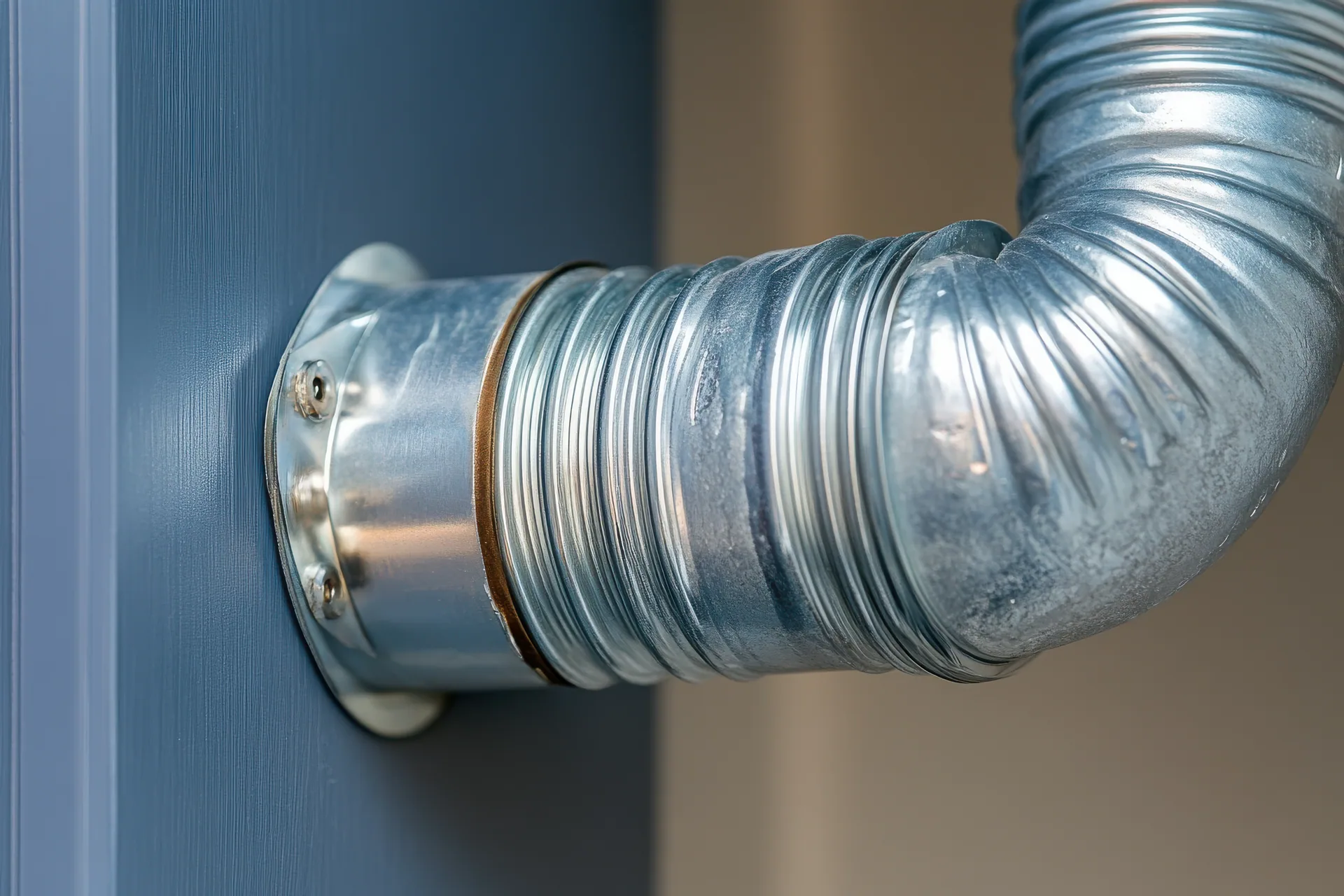
Lint buildup is one of the leading causes of house fires. In a detached house, a dryer fire is one family's emergency. In attached homes and townhouses, a single dryer fire can affect several neighbors, because the units share walls, roofs and sometimes the spaces where vent lines run.
That shared risk is the reason so many associations write a cleaning schedule into their rules, and why HOA dryer vent cleaning is treated as a safety requirement rather than an optional chore. Condo dryer vent cleaning on a regular cycle keeps lint from building up where nobody can see it, inside the wall or ceiling between the dryer and the outside. A clean line also lets the dryer push air out freely, so it runs shorter cycles and does not overheat.
When everyone in a building keeps their vent clean, every owner is safer. One neglected line puts the people on the other side of the wall at risk too, which is why a two-year cycle makes sense even when your own dryer seems to work fine.
You do not have to wait for the two-year notice if your dryer is telling you something. A clogged vent shows itself in everyday laundry, and catching it early keeps the dryer and the building safer.
A clogged line also makes the dryer work harder and longer, which raises your energy bill and shortens the life of the machine. If any of these signs sound familiar, call us and we will tell you honestly whether the vent needs attention now or can wait for your community's next cleaning date.
Neighbor Group Scheduling
Neighbors who book together save. When four or five homes in the same community schedule on the same day, we clean every vent in one visit and each home gets a better price than a single appointment. It is a simple way to meet your association's requirement and spend less doing it.
Organizing a group is easy. Talk with the neighbors on your row or in your building, pick a day that works, and call us with the addresses. We set the order of the visits and work through each unit in turn, leaving a receipt at every home. Your HOA receives the same proof whether you booked alone or with a group.
Many owners like the group day because everyone's vent is cleaned on the same schedule, so the whole row stays on the same two-year cycle. Call to ask about a group date for your street.
Each visit follows the same steps, whether we are cleaning one unit or five in a row. Kevin explains what he is doing as he goes and answers any question you have.
Call alone or with a group of neighbors. You get a free estimate first, and we set a time for each home on the list.
The line is brushed while the dryer pushes air through it. The loosened lint blows all the way outside instead of settling back at a bend in the line.
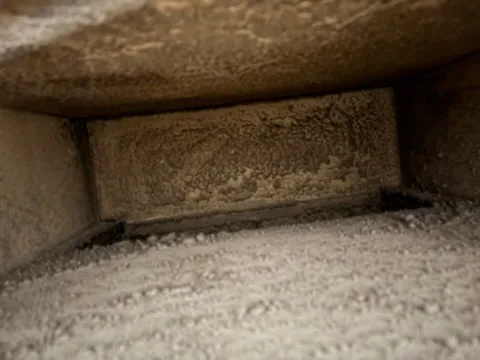
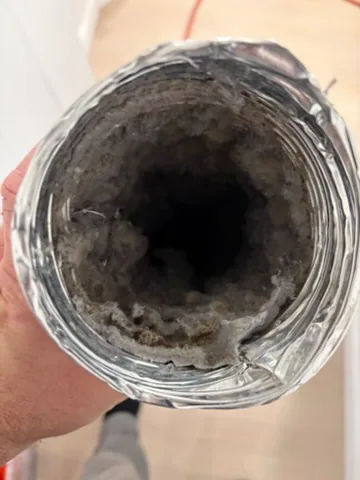
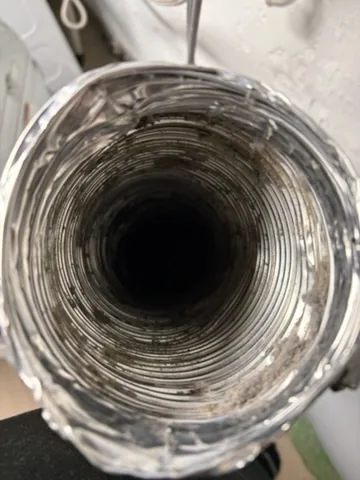
Kevin photographs the work before and after and shares the photos, so you can see what came out of the vent.
You get a receipt for the cleaning to keep or pass to your association as proof the requirement is met.
Condo buildings and townhouse rows are built differently from a single-family home. Dryer vent cleaning in condo buildings often means reaching a line that runs farther than usual, through an interior wall or up toward the roof, with more turns along the way. Every turn is a place where lint can collect and stay hidden.
Dryer vent cleaning for townhouse rows has its own rhythm. Units sit side by side with similar layouts, which is one reason a group day works so well: once the first vent is done, the next door usually follows the same pattern. We still treat each home on its own and clean each line completely.
Whatever the layout, the goal is the same. We clear the whole run from the dryer to the outside, so hot air and lint leave the house the way they should. For a full look at how we clean any home's vent, see our dryer vent cleaning on Long Island page.
Every estimate is free, and the price we quote is the price for the whole job. A few things shape it. The biggest is whether you book alone or as part of a group, since four or five homes on the same day lowers the price for each one.
The vent itself matters too. A long run with several bends usually takes more work than a short, straight line to an outside wall. Kevin will look at your setup and tell you plainly what the cleaning involves before any work starts, with no pressure and no add-ons. Pricing for HOA dryer vent cleaning is always explained before the brush comes out.
If your community is also thinking about the air ducts, ask about our whole-home air duct cleaning on the same call. We will give you a separate, honest estimate and recommend it only if your home actually needs it.
We are based in Shirley and serve attached-home communities across Suffolk and Nassau County, from the South Shore to the East End. Our home base puts us close to owners in Shirley and Medford, and we travel regularly to Southampton and west to Hempstead.
A group day works anywhere on the Island, from a condo complex near the Long Island Expressway to a row of townhomes out east. Every home gets the same full cleaning and the same receipt, whether it is the first stop of the day or the fifth.
If your community's two-year date is coming up, call to set up a visit for your home or your whole row. You can see every town we cover on our Long Island service areas page, or browse all of our duct and dryer vent cleaning services.
Yes. After every cleaning we give you a receipt showing the dryer vent cleaning was done, which you can keep for your records or hand to your association. Many Long Island townhome and condo communities require proof of a cleaning every two years, and the receipt is how owners show they have met that requirement.
When four or five homes in the same community book on the same day, we clean every vent in one visit and each home pays a better price than a single appointment. Coordinate a date with your neighbors, then call with the addresses. Every home still gets a full cleaning and its own receipt.
Many Long Island associations require a dryer vent cleaning every two years, and that matches our general recommendation for any home. Check your community's rules for the exact schedule. If your clothes start taking two cycles to dry before your next date, the vent is likely clogged and is worth cleaning sooner.
In attached homes and townhouses, one dryer fire can affect several neighbors because units share walls and roofs. Vent lines in these buildings also tend to run farther, with more bends where lint can collect out of sight. Keeping every unit's vent clean protects you and the families on either side of your walls.
We brush the vent while the dryer runs, so someone needs to let us in and give access to the dryer. Kevin will also walk you through what he found and share before and after photos. On a group day, each owner simply needs to be available for the time slot set for their home.
Book Your Two-Year Cleaning
Get your vent cleaned, your receipt in hand and your neighbors on the same schedule. Call any time, day or night, and Kevin will set up a date for your home or your whole row, with a free estimate first.